ASHEVILLE, N.C. (828newsNOW) — Long before tourists came to Asheville for mountain views, breweries and weekend getaways, people were arriving for a far more serious reason.
They were trying to survive tuberculosis.
The disease, once known as consumption or the “white plague,” was one of the nation’s leading killers in the 19th and early 20th centuries. There was no reliable cure, and doctors often prescribed fresh air, sunshine, good food and plenty of rest.
Asheville seemed to have just what they needed.
Sanatoriums sprang up across the city and surrounding mountains. Some were small private facilities. Others had sprawling grounds, sleeping porches and room for dozens of patients.
For decades, tuberculosis treatment was big business in Asheville.
But the patients who helped the city grow also stirred fears about the spread of disease. Eventually, some residents began pushing to keep sanatoriums out of their neighborhoods.
Today, most of those institutions are gone. A handful of surviving buildings, along with old newspaper accounts and photographs, tell the story of a time when people came to Western North Carolina hoping the mountain air might help keep them alive.
A mountain city becomes a health resort
Asheville’s reputation as a place to recover from illness began taking shape after the Civil War.
Dr. Henry T.F. Gatchell opened Mountain Home Sanitarium in 1869, according to research by the Preservation Society of Asheville and Buncombe County.
Six years later, Dr. Joseph W. Gleitsmann established a 30-bed facility specifically for tuberculosis patients.
In a medical history published in Annals of Internal Medicine in 2025, Dr. David O. Freedman identifies Gleitsmann’s institution as the first successful tuberculosis sanatorium in the United States, predating the better-known Trudeau Sanatorium in Saranac Lake, New York.
The approach was relatively simple. Get patients away from crowded cities, give them fresh air and nutritious meals, and allow their bodies time to rest.
It wasn’t a cure, but with few other options, patients and their families were willing to try.
By 1910, Asheville had 25 private tuberculosis sanatoriums, according to Freedman’s research.
And the institutions weren’t limited to Asheville. Black Mountain and other nearby communities also became destinations for patients seeking treatment.
Sleeping outdoors, even in winter
Life inside a tuberculosis sanatorium wasn’t necessarily comfortable.
Patients followed schedules built around meals, rest and time outdoors. Many buildings had wide porches where patients could lie in beds or reclining chairs, breathing mountain air for hours.
Some slept outside or beside open windows, even in cold weather, bundled beneath heavy blankets.
Doctors believed rest, fresh air and good nutrition offered patients their best chance of recovery.
The routine could continue for months or years.
Tuberculosis is caused by bacteria that usually attack the lungs and spread through the air. Before effective antibiotics became available, even patients who initially improved could remain seriously ill.
Still, the belief in the healing power of mountain air shaped the buildings themselves. Porches, balconies and large windows became important features of sanatorium design.
And the influence extended well beyond hospitals.
The sleeping porches of Grove Park
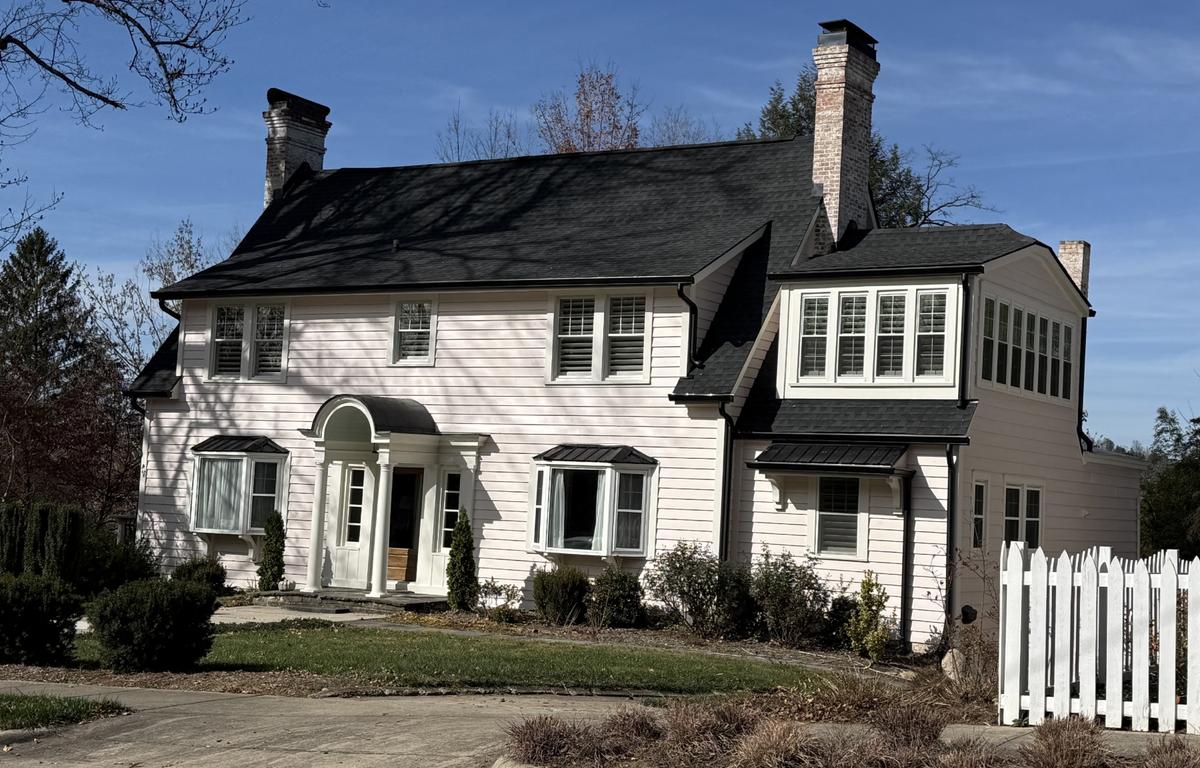
In neighborhoods near the Grove Park Inn, many houses built in the early 1900s included sleeping porches.
These were often screened or enclosed spaces designed to let residents sleep in fresh air while remaining sheltered from the weather.
The porches reflected Asheville’s reputation as a place where people came to recover from tuberculosis. But they weren’t limited to medical facilities.
According to the National Register of Historic Places nomination for Asheville’s Proximity Park Historic District, 24 of the district’s 62 contributing historic houses had sleeping porches when the neighborhood was surveyed.
That’s nearly four out of every 10 houses.
The district includes homes along Macon Avenue, Edgemont Road and nearby streets, not far from the Grove Park Inn.
The National Register documentation identifies sleeping porches at several properties, including 55 and 57 Edgemont Road. At 57 Edgemont, the house had sleeping porches projecting from both sides of the second floor.
Their presence doesn’t necessarily mean someone with tuberculosis lived in those houses. By the 1920s, sleeping porches had become desirable features in their own right.
There was an irony in their popularity.
Edwin Wiley Grove, the businessman who developed the Grove Park Inn and surrounding neighborhoods, wanted Asheville to move away from its reputation as a tuberculosis treatment destination.
According to a history published by Explore Asheville, Grove opposed plans for a national tuberculosis sanatorium and threatened to abandon his hotel project if Asheville continued promoting itself primarily as a place for tuberculosis patients.
The hotel opened in 1913, helping establish the city’s identity as a luxury mountain resort.
Yet the sleeping porches remained, built into homes in the surrounding neighborhoods.
More than a century later, they offer a reminder of how deeply Asheville’s tuberculosis history influenced the city’s architecture.
A network of sanatoriums in Black Mountain
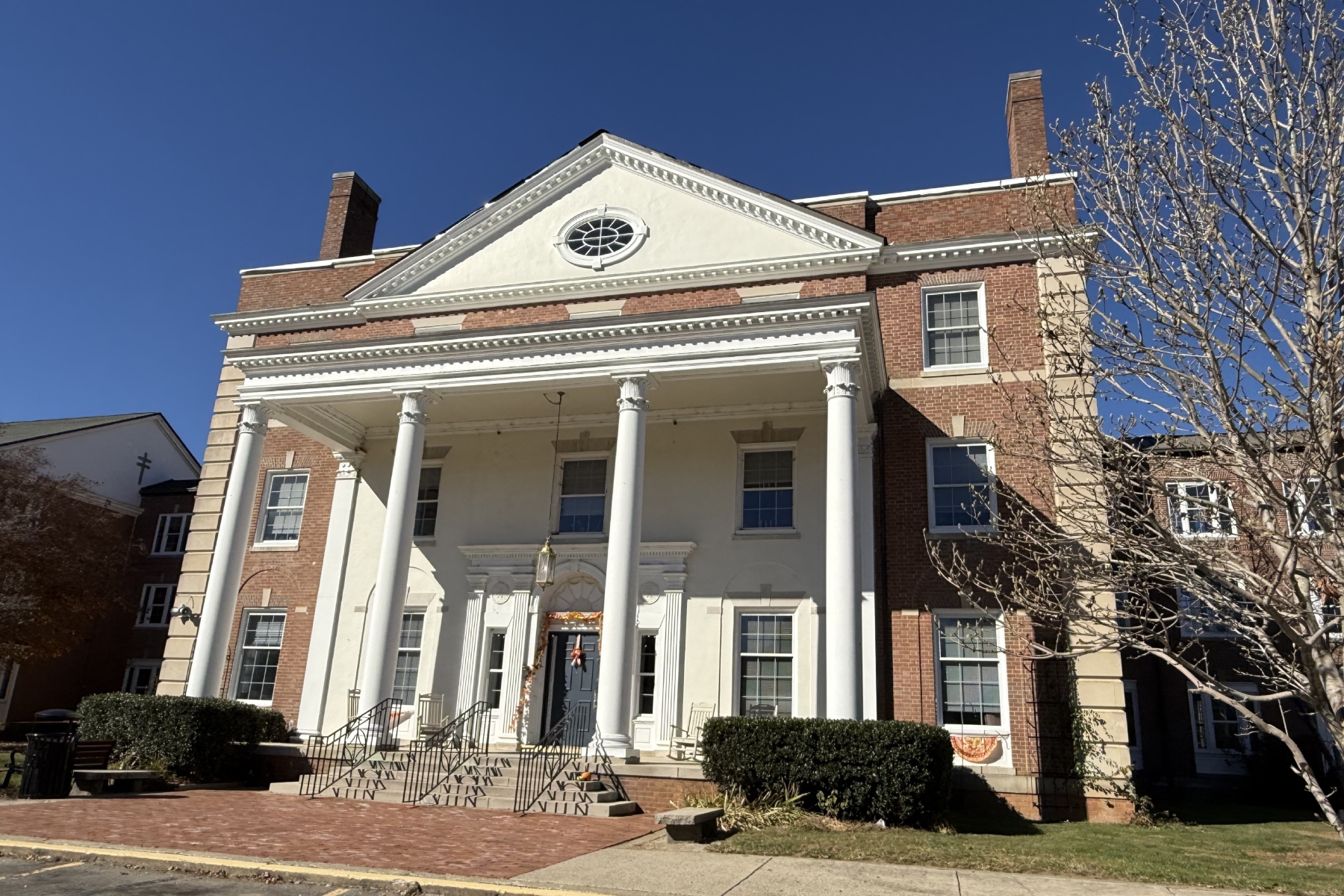
One of the best-documented facilities was the Royal League Sanatorium in Black Mountain.
It opened in August 1905 through a Chicago-based fraternal insurance organization and initially accommodated about 20 patients, according to research by the Preservation Society of Asheville and Buncombe County.
The original wooden building was destroyed by fire on Feb. 15, 1920.
All the patients escaped unharmed and were transferred to other facilities.
The Royal League rebuilt, opening a brick sanatorium in 1922 with room for about 30 patients.
It was hardly the only institution in the area.
Other facilities included Cragmont, Woodside and The Pines, a smaller sanatorium completed in 1901 that accommodated about 15 patients.
The institutions formed a network of places where people could spend extended periods receiving care, sometimes far from their families.
The Royal League eventually shifted toward convalescent care. Its property was sold in 1958 and became part of Camp Dorothy Walls, operated by the African Methodist Episcopal Zion Church, beginning in 1959.
The brick building survives, offering a rare glimpse of the region’s sanatorium era.
A sanatorium for Black patients
Not everyone had the same access to tuberculosis treatment.
Segregation limited the hospitals and medical facilities available to Black patients, even as Asheville’s reputation as a health resort grew.
In 1914, Dr. John W. Walker, a Black physician specializing in tuberculosis, opened Circle Terrace Sanatorium at 44 Circle St. in Asheville.
According to Buncombe County Special Collections, it was one of the few sanatoriums in the South dedicated to treating Black tuberculosis patients.
The facility was managed by Carrie Robinson, an experienced nurse.
Circle Terrace operated until about 1917, but the building’s story didn’t end there.
In November of that year, a fire destroyed Catholic Hill School, which served Black children in Asheville. Seven students were killed.
While a replacement school was being built, the former sanatorium provided temporary classrooms.
Students attended classes there until Stephens-Lee opened in March 1923, according to Buncombe County Special Collections and the city of Asheville.
It’s an unusual connection between two chapters of Asheville history — the fight against tuberculosis and the struggle to provide educational opportunities for Black children.
Walker continued practicing medicine and later helped establish Blue Ridge Hospital, which opened in 1922 to serve Black patients.
Segregation in tuberculosis care persisted for decades. A 1952 report in The Asheville Times described a separate wing for Black patients at the Western North Carolina Sanatorium in Black Mountain.
That state institution was separate from the privately operated Royal League Sanatorium.
Oteen becomes a major tuberculosis hospital
Asheville’s role in tuberculosis treatment grew during World War I.
The federal government developed a large military hospital near Azalea to care for soldiers suffering from tuberculosis and other illnesses.
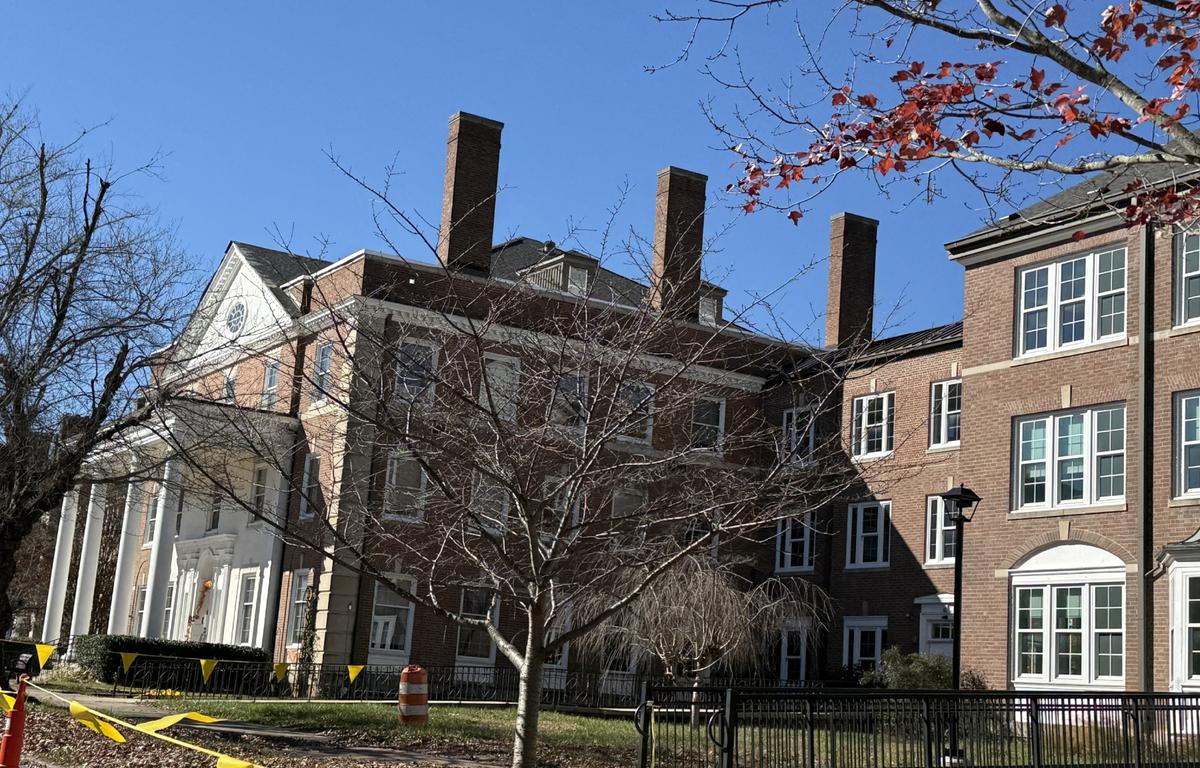
Completed in early 1919, Oteen Hospital was much larger than the private sanatoriums that had helped establish Asheville’s reputation.
The sprawling campus covered 346 acres and included 46 tuberculosis wards, according to the U.S. Department of Veterans Affairs.
During its first two years under Army and U.S. Public Health Service administration, the hospital admitted more than 5,000 patients.
Oteen later became a major tuberculosis treatment center for veterans.
The hospital also trained doctors and nurses in methods of diagnosing and treating the disease.
During the 1920s, the federal government invested heavily in the campus, replacing temporary wooden buildings with more permanent structures.
The hospital’s history wasn’t limited to medical treatment.
The North Carolina State Archives holds copies of The Oteen, a magazine produced at the hospital during World War I. Its pages included news, poetry, artwork and accounts of activities among the men receiving treatment.
The publication offered patients a way to pass the time and stay connected while facing lengthy hospital stays.
Experimental treatments and national attention
Some Asheville physicians went beyond traditional fresh-air treatment.
Dr. Karl von Ruck, who opened Winyah Sanitarium in 1888, became nationally known for his tuberculosis research and experimental treatments.
He and his son, Silvio, promoted an experimental vaccine intended to prevent or treat tuberculosis.
Their claims attracted federal scrutiny. A U.S. Public Health Service investigation in 1913 and 1914 questioned the scientific evidence supporting their methods, and the physicians disputed those findings.
The controversy reflected an era when doctors were searching urgently for ways to fight a disease that killed so many people.
For most patients, however, the daily routine remained much the same: food, rest, fresh air and time.
When the welcome wore thin
Asheville benefited economically from its reputation as a health resort, but not everyone welcomed tuberculosis patients living nearby.
The city was already regulating facilities that housed them by the early 1900s.
Regulations adopted by Asheville’s Joint Board of Health in February 1913 required sanatoriums, boardinghouses and other establishments accommodating tuberculosis patients to obtain licenses.
The rules also required applicants to identify their locations and provide information about nearby property owners.
The conflict between Asheville’s medical industry and its growing residential neighborhoods was becoming increasingly apparent.
A 1915 report published by the U.S. Public Health Service described a city where hotels were advertising that they would not accept tuberculosis patients.
The report also recounted disputes over licenses for boardinghouses that had accommodated patients for years.
In one case, a longtime boardinghouse operator was granted only a six-month license after a neighbor protested. The neighbor, according to the report, had come to Asheville with tuberculosis years earlier and apparently recovered.
By September 1921, The Asheville Times was reporting on proposed restrictions that would have required tuberculosis institutions to remain at least 100 feet from neighboring property lines.
The proposal also called for existing facilities that failed to meet the requirements to close by September 1922.
Residents in areas including Montford and Cumberland Avenue raised concerns about nearby institutions and property values.
The newspaper account documents the proposal, although it does not establish whether those particular restrictions were adopted.
Freedman’s historical research indicates that restrictive city regulations contributed to the disappearance of nearly all tuberculosis sanatoriums within Asheville’s city limits by the 1920s.
It was a striking change for a city whose growth had been closely tied to people seeking treatment.
Even the president’s family came to Asheville
Despite changing attitudes, Asheville remained a destination for people battling tuberculosis.
In 1930, Herbert Hoover Jr., the eldest son of President Herbert Hoover, was diagnosed with the disease. His doctors recommended a year of rest.
According to the Herbert Hoover Presidential Library and Museum, the president and First Lady Lou Hoover offered to care for their son’s three young children at the White House. They also offered him use of their mountain retreat in Virginia.
Instead, Hoover Jr. and his wife, Margaret, eventually moved to Asheville for the remainder of his recovery.
A photograph preserved by the presidential library shows Lou Hoover visiting her son in Asheville.
Even the president’s family had turned to the mountains of Western North Carolina at a time when fresh air and rest were among the few treatments available for tuberculosis.
The end of an era
The development of effective antibiotics in the mid-20th century changed tuberculosis treatment.
Patients no longer had to rely primarily on extended stays in mountain sanatoriums. Medication offered a far more reliable way to fight the infection.
The old institutions gradually closed, changed purposes or disappeared.
Some became part of other institutions, while others were demolished or gradually forgotten.
But the evidence of Asheville’s tuberculosis era hasn’t vanished entirely.
Sleeping porches remain part of historic homes near the Grove Park Inn. In Black Mountain, the brick Royal League building still stands more than a century after patients first came to the property seeking relief from tuberculosis.
They’re reminders that long before Asheville became a vacation destination, people traveled to these mountains hoping they might survive.